Home sweet home
Paleontologists have discovered fossils of over 150 pterosaur species, but the vast majority come from just a few locations that allowed exquisite preservation. These sites, known as Lagerstätten (German for 'storage places'), are usually made of very fine-grained sediments formed under calm, low-oxygen waters.
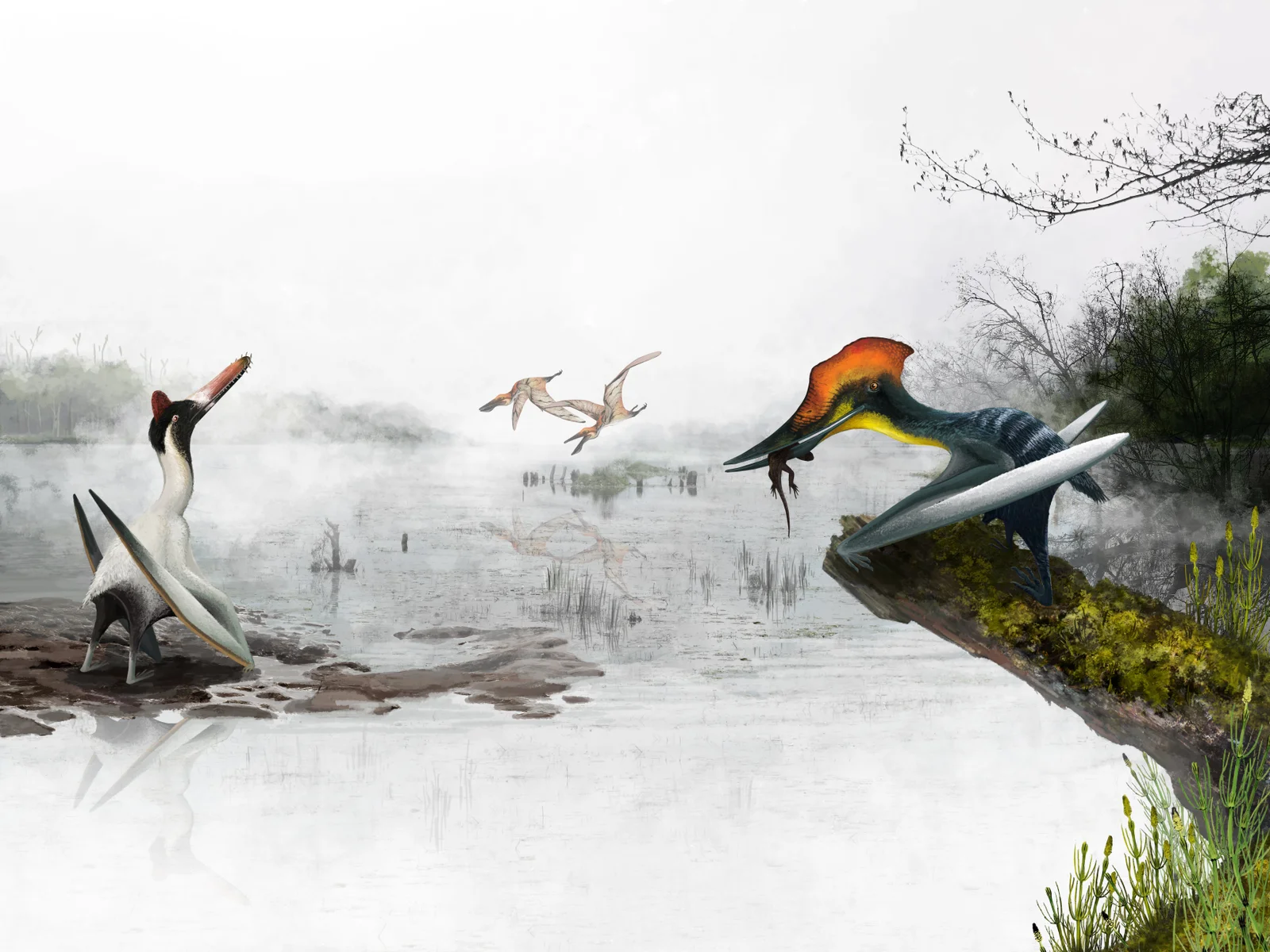
Pterosaur graveyards full of beautifully preserved fossils are so far known from Germany, Brazil, and China. The Jiufotang pterosaurs lived in a temperate forest with many conifers and ginkgoes, as well as some of the earliest flowering plants.
Although we can learn a lot from these locations, they don't give us a complete picture of pterosaur diversity. Imagine if almost all we knew about birds came from the Bahamas, the Red Sea, and Klamath Lake. We would certainly know a lot about birds, but it would be nowhere near a complete picture.
The fossil record of pterosaurs is similarly skewed. We know pterosaurs did live in upland forests because we've found rare fossils there. Unfortunately, fast-flowing rivers tended to destroy bones before they could fossilize.