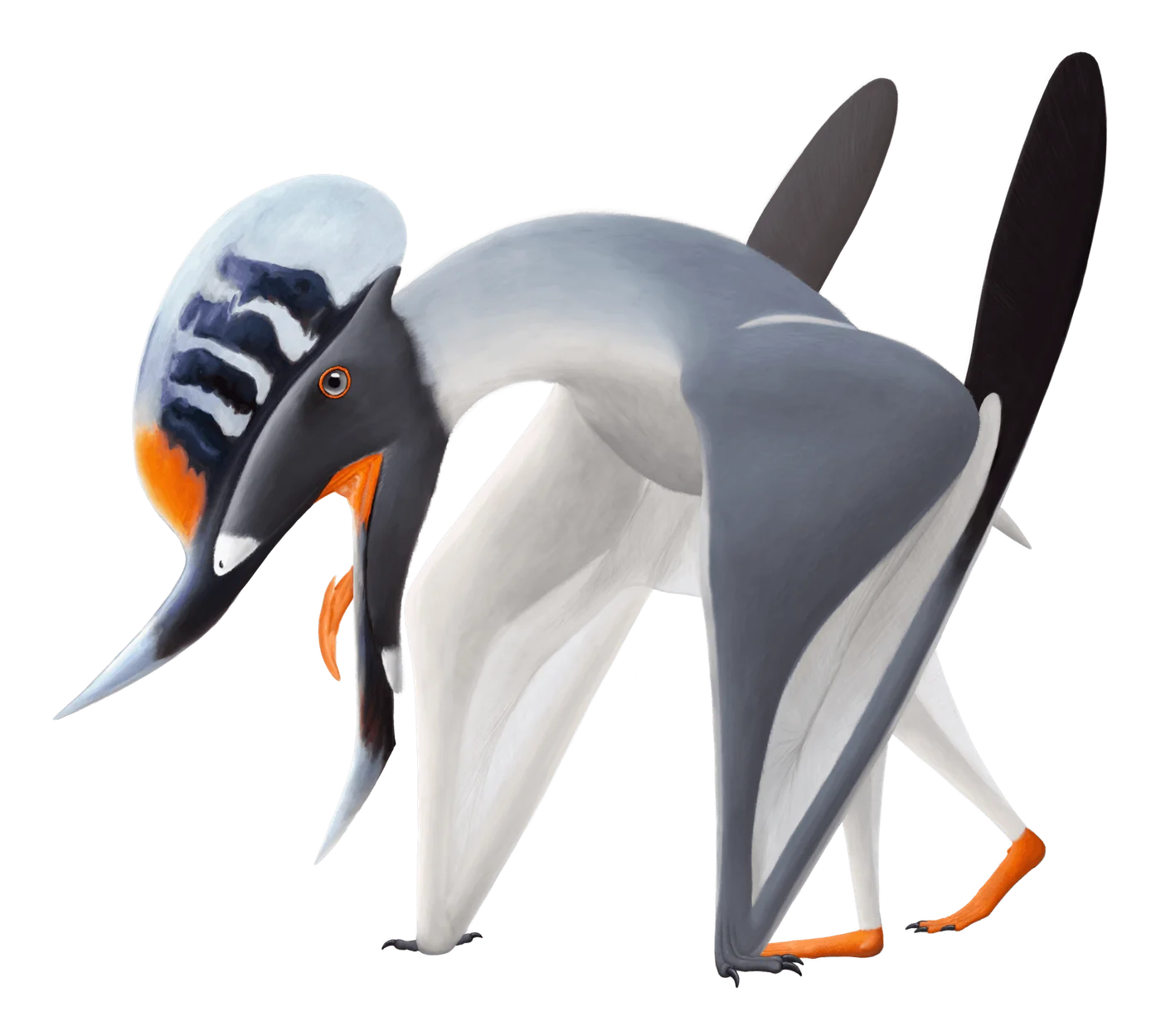
Banguela - Walking
Art: Oliver Demuth
All illustrations are copyright their respective artists. Use of any image requires a paid licence — contact us for licensing enquiries.
Banguela
/ban-GWEL-a/The toothless granny pterosaur among toothy cousins, Banguela took the world by storm when it was publicized online and still continues to challenge the evolution of toothlessness among the flying reptiles.
Pterosaur data
Mesozoic era · 252–66 Ma
Wingspan
About this pterosaur
For a long time, the curve-jawed dsungaripterids were thought to be shellfish-crushing creatures with hard and powerful teeth. The type genus of the group Dsungaripterus is known from Early Cretaceous China, where it coexisted with the much slimmer and straighter-jawed Noripterus. The dsungaripterids are also known for being the "ugliest pterosaurs ever." The front of their mouths were upturned while their teeth were at the back. It was a design that worked. They were specialized enough to coexist alongside more generic pterosaurs and live in their own niches in the ecosystem. This partitioning meant a lack of competition among numerous similarly-sized genera.
Dsungaripterids were known from South America but none from the popular pterosaur hotspot of Araripe, Brazil. The rock formation in question is the Romualdo Member of the incredibly fertile Santana Formation. This area contains rocks from the Aptian and Albian Stages of the Early Cretaceous with numerous pterosaurs that ranged from crested, herbivorous tapejarids to albatross-like ornithocheirids and running predatory thalassodromids. Dsungaripterids on the other hand, were unknown in the Brazilian rocks for a long time until Banguela oberlii was scientifically described.
Banguela's remains are far from good. It is known on the basis of a holotype lower law, just 40% complete. It is not a lot to go on but was influential to the researchers who found it. Banguela oberlii saw the light of day in the year 2014, around eleven years after its discovery. The animal was described by Andre Jacques Veldmeijer, and named as a specimen of Thalassodromeus, a very well-known creature. In 2014, a team of Jaime Headden and Hebert Bruno Nascimento Campos redescribed and renamed the remains. Even the animal's name means "toothless" in Portuguese, and is used as a term of endearment for an elderly woman. It was found out to have been a dsungaripterid, albeit without a single tooth in its jaws. This was an enigma, for all its relatives had the same characteristic crushing teeth.
Banguela was the only dsungaripterid to have lost its teeth altogether. This came as a shock because only some families in the Azhdarchoidea (chaoyangopterids, thalassodromids, tapejarids and azhdarchids) and the pteranodontids and nyctosaurids of the Ornithocheiroidea, lost their teeth completely. Thus we have multiple, even independent cases of toothlessness in advanced pterosaurs. While the Azhdarchoidea are certainly close relatives, the pteranodonts and nyctosaurs are rather distant from one another, and so this must have been evolutionary convergence.
The dsungaripterids belong to the Neoazhdarchia, a subdivision which includes all the other families listed above except for the tapejarids. By rights, and according to Dollo's Law, Banguela is a pterosaur that should have teeth yet it does not. This rule asserts that when an animal loses an anatomical feature, it cannot regain it. This is used to explain the loss of teeth in birds while the loss of teeth in pterosaurs has not been spoken of that much. One theory by Headden himself is that the teeth of dsungaripterids became smaller and fewer in number until finally they disappeared, and the toothless front of the jaws increased in length. Banguela seems to have been the ultimate example of this strange trend.
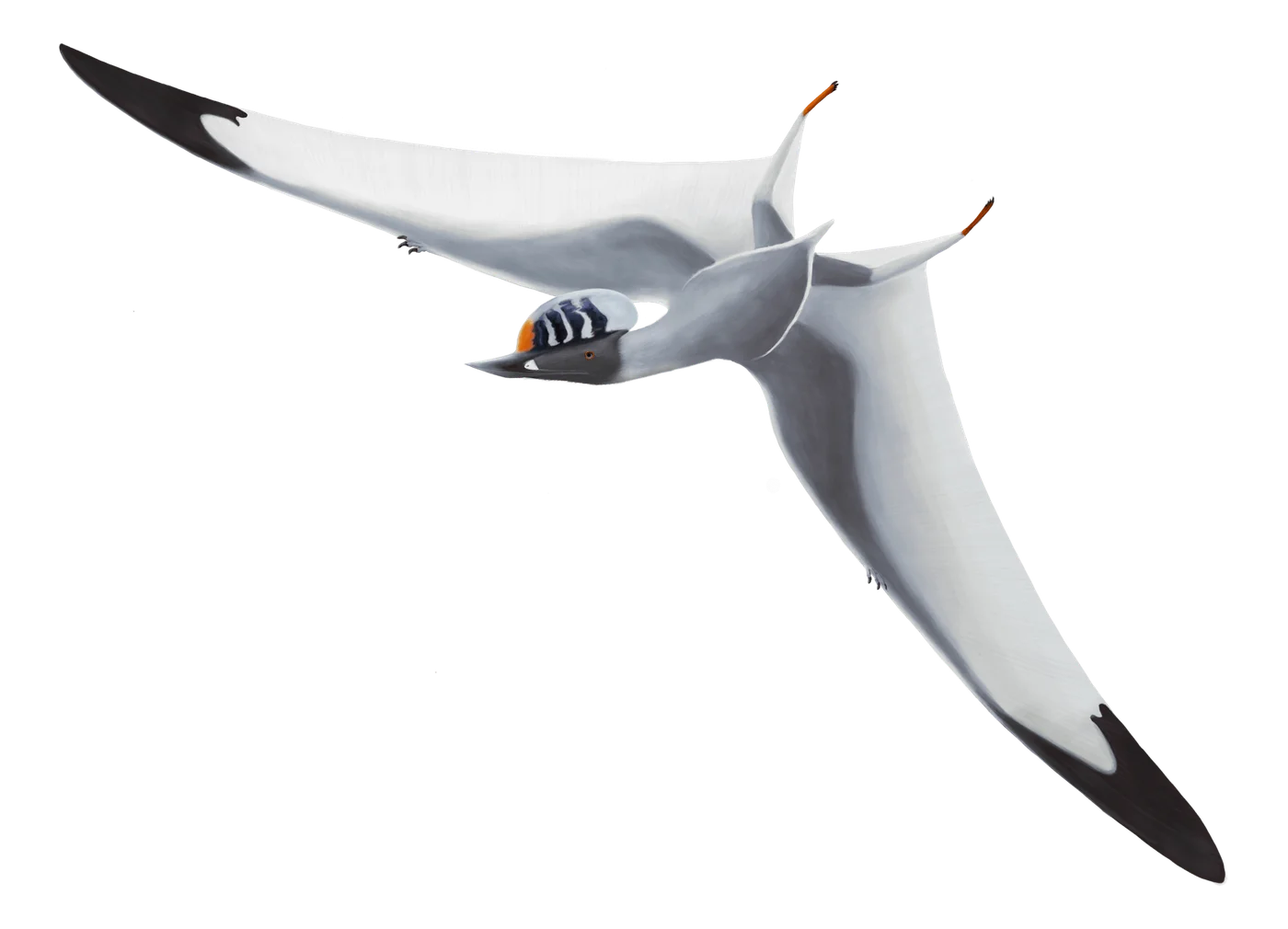
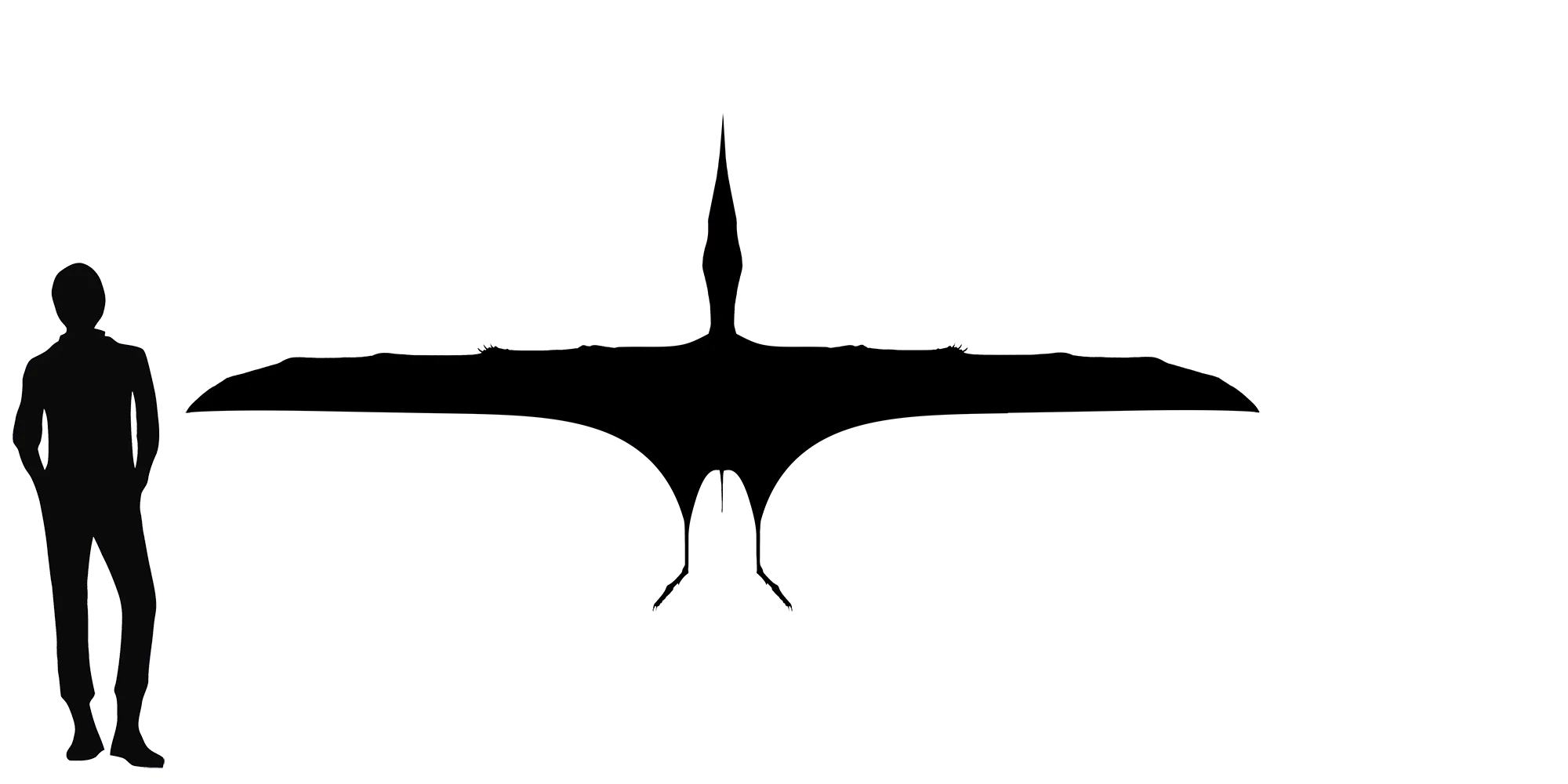
So far, not much of the creature is known, but it is still reconstructed as a fairly typical-looking member of its family. The skull may have been around 60 centimeters long, and the pterosaur would have had a 3.6-meter wingspan. It may have been an adept walker, probably preying on small animals. At this point however, it is all guesswork. What it was really doing with its possibly upward-curving toothless jaws, is as yet unknown, though. The niche partitioning in Brazil may have allowed for something unique to develop so Banguela could fit into the vast diversity that filled the area. Many toothless pterosaurs have been found, from the pteranodontids and nyctosaurs, both ornithocheiroids, to the azhdarchoids. Now even the Dsungaripteridae can claim to have a toothless member among their ranks.
Across the network
Credits