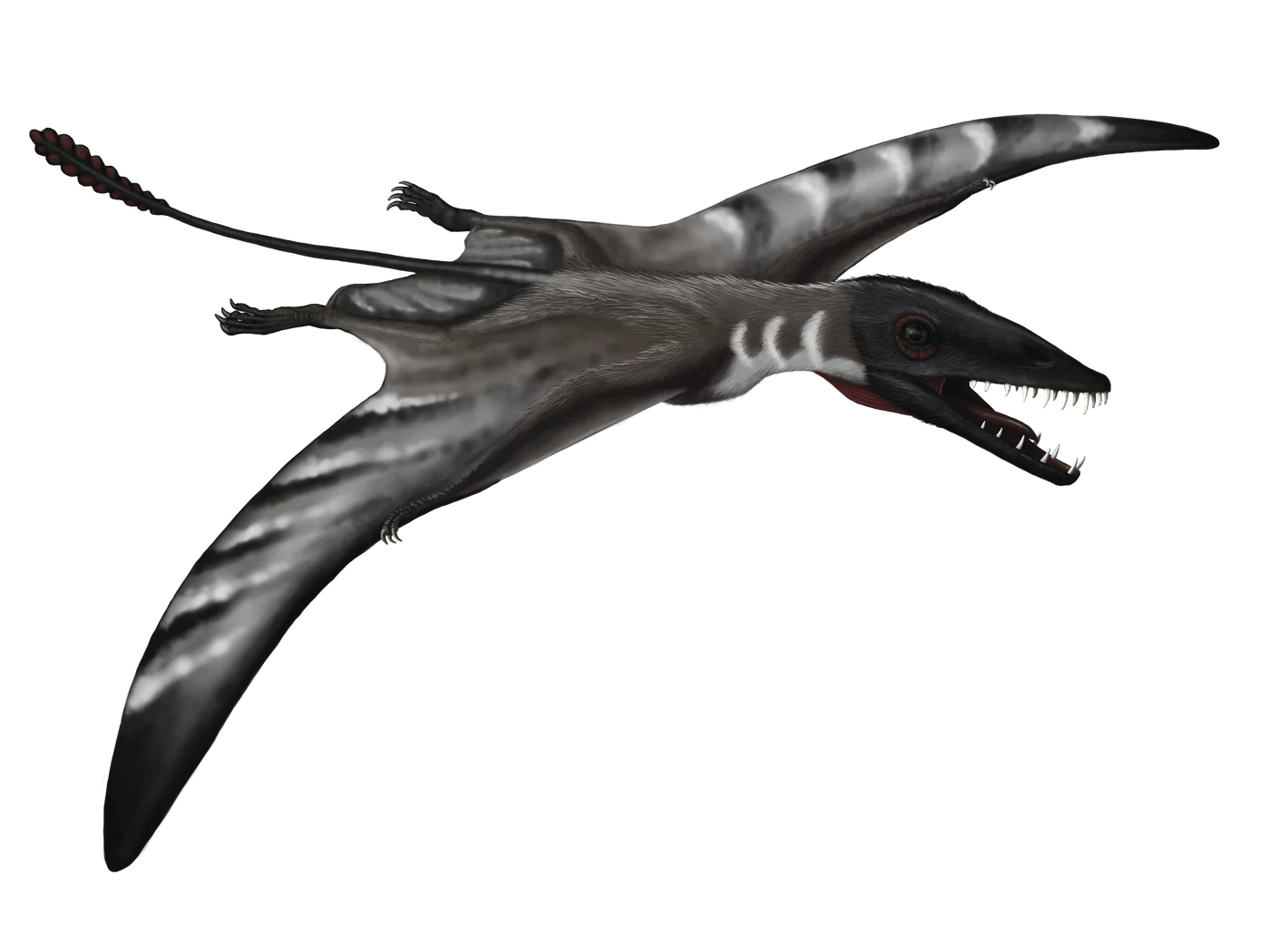
Scaphognathus
Art: Nathan Rogers
All illustrations are copyright their respective artists. Use of any image requires a paid licence — contact us for licensing enquiries.
Scaphognathus
/ska-FOG-nay-thus/
The German pterosaur roster expands with the predatory Scaphognathus. This thick-jawed creature was not hunting fish but instead took on small prey in the scrubby deserts of the island around it.
Pterosaur data
Mesozoic era · 252–66 Ma
Wingspan

About this pterosaur
Scaphognathus crassirostris (boat jaw with a fat snout) was yet another of those Solnhofen pterosaurs lumped together with Pterodactylus. It was described on the basis of a relatively complete and well-preserved holotype by August Goldfuss, in 1831. The fossil includes parts of the forelimbs, the skull, rib cage and much of the vertebral column minus the tail. The animal’s jaws are about as blunt as its name suggests and it has far fewer teeth than in Pterodactylus, with just sixteen in the upper jaw. They are also much longer and the whole animal might have been more of an active land predator tackling tough prey, rather than a mere piscivore.
It is also a non-pterodactyloid, belonging to the family Rhamphorhynchidae. It is the founder member of the small subfamily called the scaphognathines, which contains a number of small to medium-sized Jurassic pterosaurs like itself.
Scaphognathus is also known to have been a diurnal animal, coexisting with its similarly day-hunting contemporary Pterodactylus by way of dietary preferences. The two animals are certainly around the same size though, both of them having 90-centimeter wingspans.
Across the network
Credits