Sinopterus
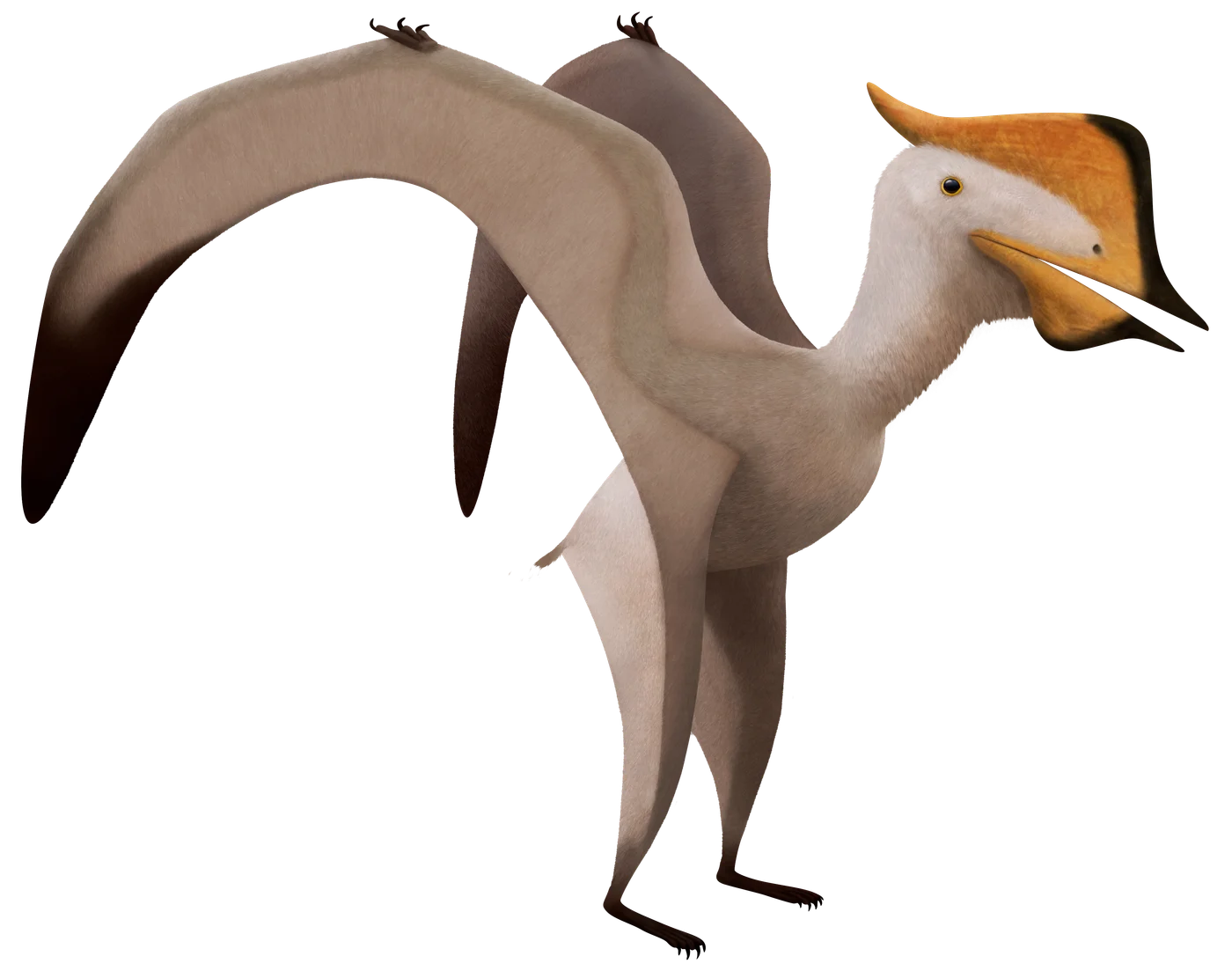
Art: Julio Lacerda
All illustrations are copyright their respective artists. Use of any image requires a paid licence — contact us for licensing enquiries.
Sinopterus
/sy-NOP-ter-us/This cat-sized crested pterosaur had no teeth, but ate almost anything.
Pterosaur data
Mesozoic era · 252–66 Ma
Wingspan
About this pterosaur
Sinopterus is known from several well-preserved skeletons found in the Lower Cretaceous Jiofutang Formation of Liaoning Province, China. These skeletons were discovered and named in the early 21st Century and represent two closely related species of somewhat small, short-tailed pterosaurs.
The skull of the larger species, S. dongi, was about 17 cm (7 inches) in length, and about 12 cm (5 inches) in the smaller species, S. lingyuanensis. Both species have long toothless snouts with the upper and lower jaws coming to sharp points. The upper and lower jaw margins are slightly curved, with the tip of the upper jaw pointing slightly downward. There is a ridge-like crest on the skull starting from the middle of the snout and extending beyond the rear of the skull. This crest was probably made larger by soft tissues, as is seen in the close relatives of Sinopterus. The lower jaw also bears a small crest on its chin.
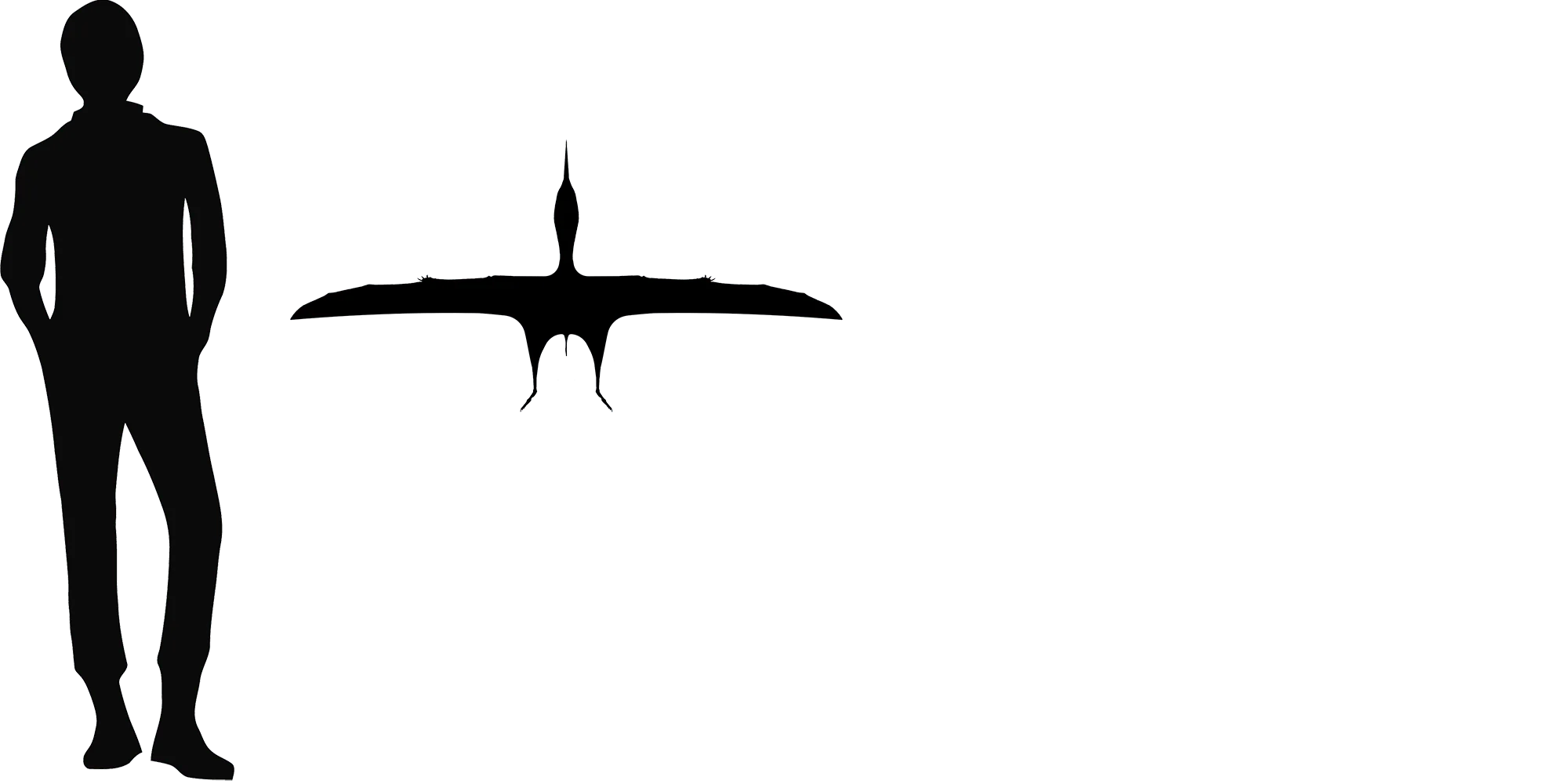
Like all pterosaurs, Sinopterus walked on all fours when it was on the ground, and would have been about the same size as a large house cat. Its legs were fairly long, being nearly the same length as its forelimbs not counting the wing finger, and the wingspan was about 100-120 cm (40-47 inches).
When first described, Sinopterus was found to be a tapejarid, a large pterosaur lineage found in Lower Cretaceous rocks mostly in China and Brazil. Tapejarids are all toothless, and unlike Sinopterus, most have very short and tall skulls with very tall crests. Tapejarids are part of the pterodactyloids, the short-tailed pterosaur group that first emerged in the Late Jurassic and came to dominate the skies throughout the Cretaceous. The closest relatives of the tapejarids are dsungaripterids, thalassodromids, chaoyangopterids, and azhdarchids, together forming a group called the azhdarchoids.
Sinopterus was an omnivore, likely eating crustaceans, insects, fish, small terrestrial vertebrates, as well as seeds and fruit. The environment of the Jiofutang Formation was temperate and forested, with abundant ginkgoes and yews. The forests were crossed by numerous rivers, and had many lakes and swamps, providing Sinopterus with numerous food sources.
Across the network
Credits